


e.g. AMT | PLA2G6 | Pachygyria
e.g. AMT | PLA2G6 | Pachygyria
Rare genetic diseases collectively affect millions of individuals worldwide, and India, with its vast and genetically diverse population, carries a significant yet under-characterised burden of these conditions.
Despite advances in genomic technologies such as next-generation sequencing, a major challenge in clinical genomics remains the interpretation of identified variants.
A substantial proportion of variants detected in patients are classified as Variants of Uncertain Significance (VOUS), where insufficient evidence prevents definitive classification as pathogenic or benign. This uncertainty creates a critical bottleneck in clinical decision- making, genetic counselling, and patient management.
One of the key reasons for this challenge is the lack of population-specific genomic databases. Most existing global variant databases are heavily inclined towards European populations, leading to underrepresentation of Indian genetic diversity. As a result, many variants identified in Indian patients remain poorly annotated or misclassified, limiting their clinical utility.
In addition, there is often a lack of systematic documentation of rare variants observed in clinical practice nationwide.


Variant
162
Gene
157
Clinician/ Variant Submitter
31
Researcher
13Variant Overview
ACMG Classification Overview
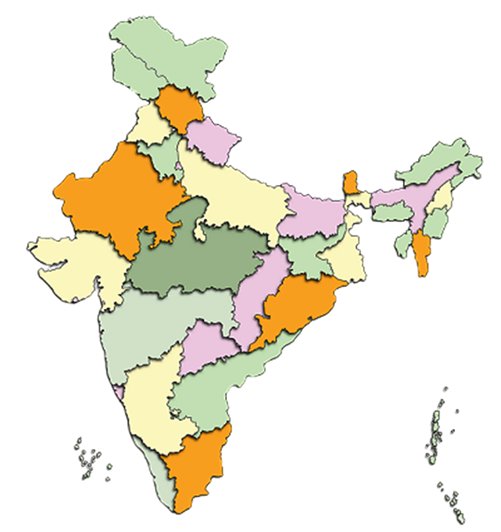
Click any blue dot on the map
to view Clinicians & Researchers
registered in that region.